Product added to cart
Loading...
Chest Carry vs Belt Carry: Which Holster Style Works Best for Your Routine?
Introduction
During long days outdoors, many users quickly discover that holster choice impacts not just comfort, but how efficiently they can access their firearm when terrain, clothing, or posture changes. Some prefer the familiar feel of a belt-mounted rig, while others rely on the elevated stability of chest carry during field work or extended hikes.
This guide compares both methods through real-world considerations—fit, accessibility, movement, and gear compatibility—helping you select a holster style that supports your daily routine with confidence.
1. A Real-World Look at Carry Methods
During field maintenance or backcountry travel, many users notice the difference within the first few hours.
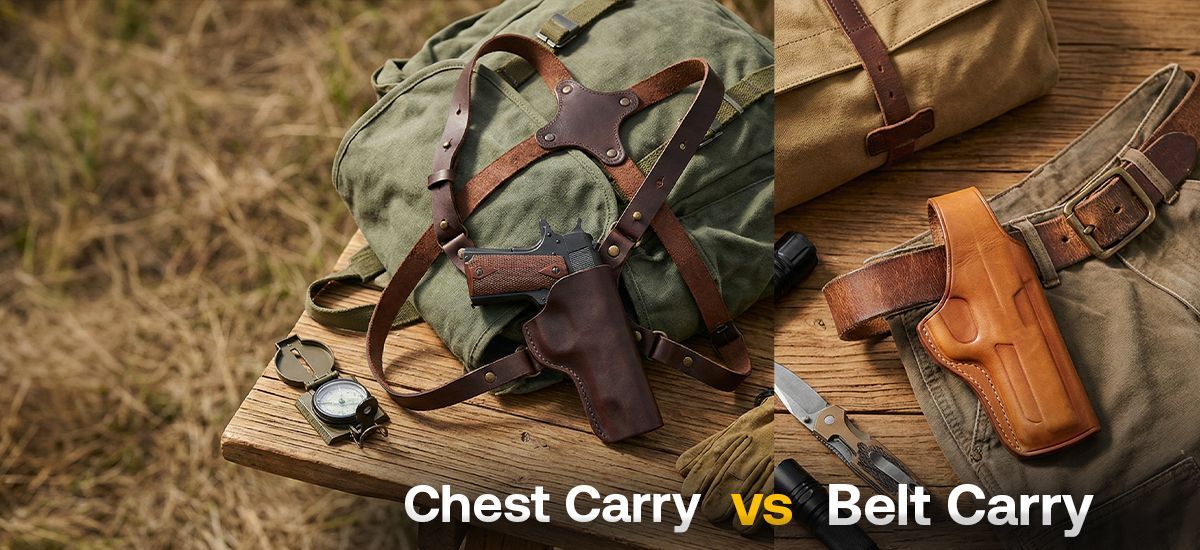
A chest holster remains centered and clear of brush, packs, and belts, while a belt holster keeps the firearm in a familiar, natural position at the hip. The right choice depends heavily on movement patterns, gear, and environmental conditions.
Each method has strengths—choosing the best one is about matching your needs to the environment you work or travel in.
2. Chest Carry: Stability and Access Above the Waistline
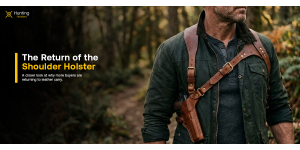
Chest carry places the holster high on the torso using a harness system. It keeps the firearm accessible even when layered clothing or gear might obstruct belt access.
Advantages of Chest Carry
- Works with Backpacks & Harnesses
Because the holster sits above the hip, it remains accessible when wearing a backpack, bino harness, chest rig, or heavy winter layers. - Reduced Interference in Brush or Steep Terrain
Elevation keeps the firearm clear of branches and equipment, minimizing snagging during climbs or thick cover. - Balanced Weight Distribution
A properly fitted chest holster spreads weight across the shoulder straps, relieving pressure from the beltline. - Seated Access
Ideal for users who spend extended time in vehicles, tractors, or ATVs.
Considerations
Requires an initial adjustment to ensure straps fit securely
May feel different for users accustomed to hip draw angles
Chest carry excels when mobility, layers, or equipment would slow traditional belt access.
3. Belt Carry: Familiarity, Simplicity, and Everyday Reliability
Belt carry remains the most widely used method due to its intuitive placement and minimal adjustments.
Advantages of Belt Carry
- Natural Draw Motion
Many users train from the hip, making belt carry instinctive and efficient. - Simple, Low-Profile Setup
No harness or shoulder straps—just the holster and belt. - Comfortable for Upright Travel
Walking, standing, and general daily tasks pair well with a strong-side hip position. - Excellent for Open Carry Environments
Range days, property patrol, and general outdoor tasks are well suited for belt-mounted holsters.
Considerations
Layers, jackets, and pack belts may obstruct access
Can become uncomfortable if carrying heavier firearms for long periods
Belt carry performs best when clothing is minimal and freedom of movement is consistent.
4. Crossdraw Belt Carry: An Alternative for Seated Work
Crossdraw placements angle the firearm toward the dominant hand from the opposite hip.
When Crossdraw Works Best
Operating vehicles or machinery
Seated positioning for extended durations
Users who prefer a more ergonomic draw angle
Crossdraw is a functional middle ground between traditional belt and chest carry.
5. Comparing Comfort and Movement in Real Conditions
Climbing and Hiking
Chest carry tends to be more stable and accessible when climbing steep ground or stepping over uneven terrain.
Cold Weather Layers
Chest carry stays visible and clear even when jackets or insulated bibs restrict the belt area.
Everyday Tasks
For simple walking, chores, or light outdoor work, belt carry remains comfortable and familiar.
Long-Distance Travel
Chest carry provides uninterrupted access during drives or long rides on machinery.
6. Which Carry Method Should You Choose?
Here’s a simplified comparison to guide your choice:
| Factor | Chest Carry | Belt Carry |
|---|---|---|
| Works with backpacks & straps | ✔ Excellent | ✖ Often obstructed |
| Access while seated | ✔ Very good | ✔ / ✖ Depending on angle |
| Brushy or steep terrain | ✔ Stable | ✖ Higher snag potential |
| Everyday familiar draw | ✖ Slight learning curve | ✔ Very intuitive |
| Heavy firearms | ✔ Better distribution | ✖ Can pull on belt |
| Cold-weather clothing | ✔ Less interference | ✖ Often covered |
Conclusion
Choosing between chest carry and belt carry depends on your environment, clothing, and the type of work you perform.
If you navigate steep ground, wear layered gear, or spend long hours seated, chest carry offers unmatched accessibility and stability.
If you prefer a simple, traditional setup with a familiar draw motion, belt carry remains effective and reliable.
Both methods have clear strengths. The best choice is the one that supports your routine, keeps your firearm accessible, and performs consistently in real-world conditions.