Product added to cart
Loading...
Chest Holster vs Hip Holster for Hunting: Practical Differences in the Field
Introduction: Why Hunters Struggle With This Choice
Hunters rarely question whether to carry a sidearm in the field—but how to carry it becomes a challenge once terrain, packs, weather, and long hours are involved. Many hunters start with a traditional hip holster because it feels familiar. The problems usually appear later: discomfort under a backpack, difficult access while seated, or instability on steep ground.
This blog exists because the choice between a chest holster and a hip holster is not about preference—it is about movement, safety, and consistency in real hunting conditions. Understanding these differences helps hunters avoid equipment frustration and make a carry decision that supports their hunt rather than complicates it.
A Real-World Scenario: When Carry Method Starts to Matter
During extended hunts, especially in mountainous or backcountry terrain, hunters often transition through multiple positions—walking, climbing, sitting, glassing, kneeling, or navigating deadfall. In these conditions, carry placement directly affects access and stability.
Hunters commonly report that a handgun carried comfortably at the trailhead becomes harder to reach once a pack is tightened, layers are added, or fatigue sets in. These experiences are not failures of the firearm or the hunter, but limitations of the carry method chosen.
This is where understanding the functional differences between chest holsters and hip holsters becomes essential.
Understanding Hip Holsters in a Hunting Context
Hip holsters are traditionally worn on the belt at the strong-side hip. They are widely used due to familiarity and ease of use in non-hunting environments.
Strengths of Hip Holsters
Familiar draw motion for most firearm owners
Simple setup with standard belts
Easy access when standing without pack interference
Limitations in the Field
In hunting environments, hip holsters face several challenges:
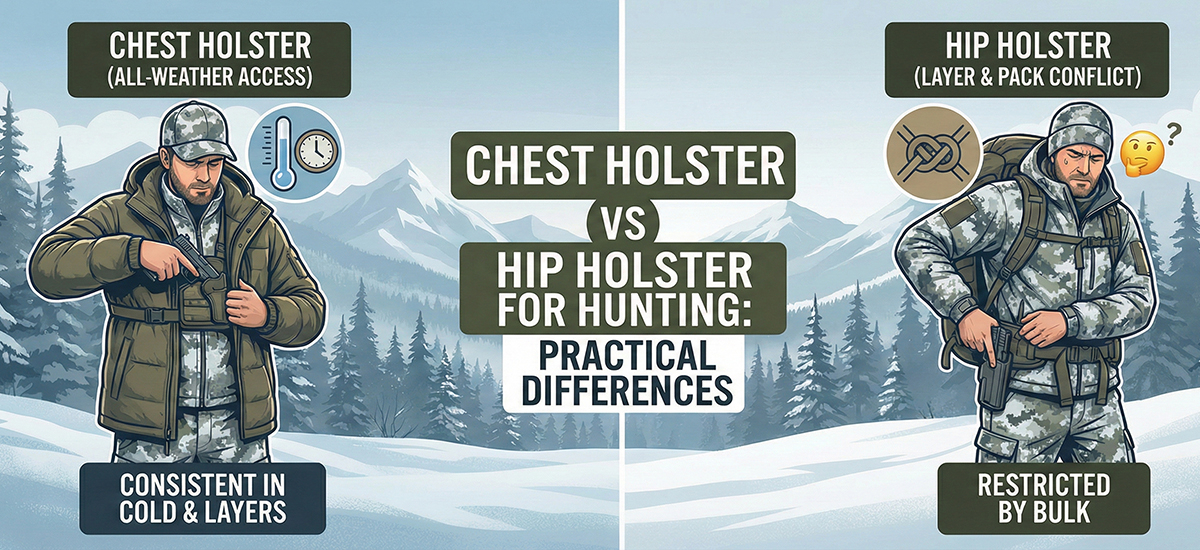
Backpack interference: Waist belts and load-bearing straps often overlap the holster area, causing pressure points and limiting access.
Restricted access while seated: Drawing from the hip becomes difficult when sitting, riding, or glassing.
Movement instability: Crawling, climbing, or steep side-hilling can cause shifting or contact with vegetation.
Layering conflicts: Cold-weather clothing can obstruct access or reduce draw consistency.
Hip holsters can still be effective for short hunts, lightweight packs, or flatter terrain. However, their limitations become more apparent as hunt complexity increases.
How Chest Holsters Address Field-Specific Challenges
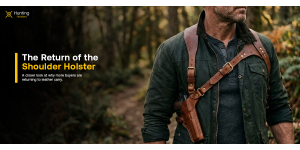
Chest holsters position the handgun centrally on the upper torso, typically between the chest and sternum. This placement is designed to remain accessible regardless of body position or pack configuration.
Practical Advantages of Chest Holsters
Unobstructed access with backpacks: Chest placement avoids waist belts and hip straps entirely.
Consistent draw while seated or kneeling: Access remains reliable during glassing or resting.
Improved stability during movement: Central positioning reduces swing and shift.
Visibility and awareness: Hunters can visually confirm retention and positioning.
Chest holsters are particularly valued during long hunts where pack weight, terrain changes, and fatigue affect posture and movement.
Safety and Retention: A Critical Difference
One of the most overlooked aspects of holster selection is retention under dynamic movement.
Hip Holster Considerations
Retention relies heavily on belt tension
More exposure to brush, rocks, and obstacles
Increased chance of contact during crawling or climbing
Chest Holster Considerations
Centralized weight reduces leverage forces
Less contact with external obstacles
Retention systems remain within the hunter’s line of sight
In rugged terrain, consistent retention is not optional—it is a safety requirement. Hunters navigating uneven ground benefit from carry systems designed to minimize external impact and movement.
Comfort Over Long Hunts
Comfort is not just about padding—it is about load distribution.
Hip holsters add weight to an area already under stress from pack belts and clothing layers. Over time, this can contribute to fatigue or discomfort. Chest holsters distribute weight across the upper torso, often reducing pressure concentration during extended wear.
This difference becomes noticeable during multi-hour or multi-day hunts, where cumulative strain matters.
Weather, Clothing, and Seasonal Considerations
As seasons change, so does carry practicality.
Cold weather: Bulky jackets can interfere with hip access; chest holsters remain accessible with proper layering.
Wet conditions: Elevated positioning helps reduce exposure to moisture and debris.
Early-season hunts: Lightweight setups may still accommodate hip holsters without issue.
Choosing a carry method that adapts across seasons helps maintain consistency and safety year-round.
Which Option Is Right for You?
There is no single answer for every hunter. The best choice depends on terrain, pack use, hunt duration, and personal movement patterns.
Chest Holsters Are Typically Better For:
Backpack hunting
Steep or uneven terrain
Long-duration hunts
Frequent sitting or glassing
Hunters prioritizing stability and consistent access
Hip Holsters May Still Work Well For:
Short hunts
Minimal pack use
Flat or lightly wooded terrain
Hunters who prioritize familiarity and simplicity
Understanding these distinctions allows hunters to make informed decisions rather than relying on habit alone.
Why This Decision Matters
Holster choice affects more than convenience—it influences safety, efficiency, and confidence in the field. A carry method that works against the hunter can distract from situational awareness and physical endurance.
By understanding the real-world differences between chest holsters and hip holsters, hunters can select gear that supports their movement, environment, and hunting style rather than limiting it.
Final Takeaway
The chest holster vs hip holster debate is not about which is universally better—it is about which performs better under specific hunting conditions. For many modern hunters, especially those carrying packs or covering difficult terrain, chest holsters provide practical advantages that align with real field demands.
Making an informed carry choice reduces frustration, improves safety, and allows hunters to focus on what matters most: the hunt itself.