Product added to cart
Loading...
The History of Holsters: From Early Hunting Carry to Modern Holster Types
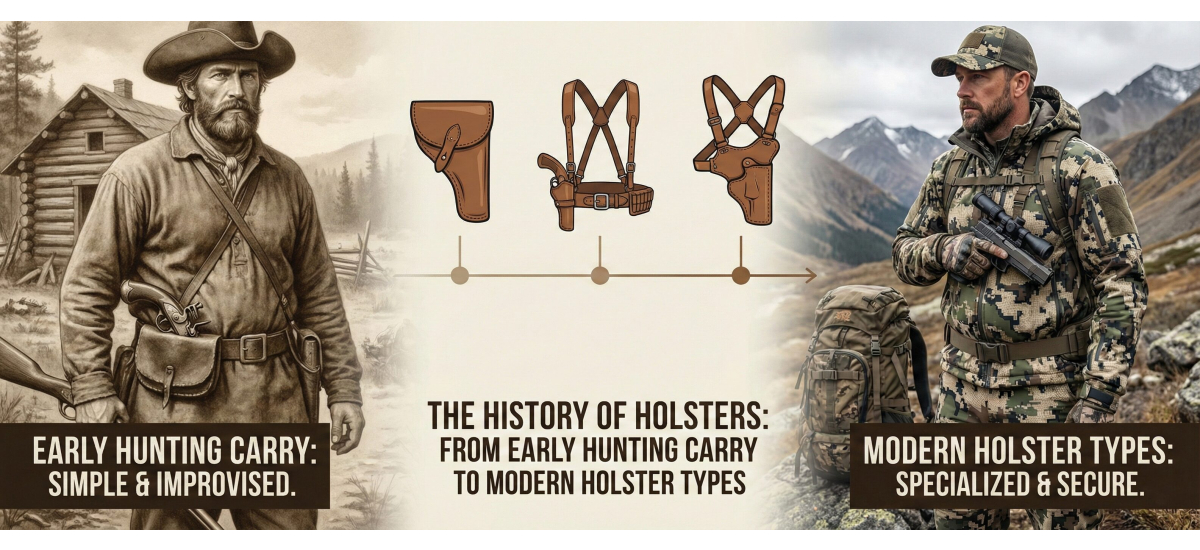
Firearms have been part of hunting culture for centuries, but the way hunters carry them has evolved just as significantly as the firearms themselves. Holsters were never designed for fashion or convenience alone. They emerged from practical needs—safety, accessibility, and the ability to move through demanding terrain without compromising control of a firearm.
Understanding the history of holsters provides useful context for modern hunters. It explains why certain holster designs exist today, how materials and placement evolved, and why different hunting environments require different carry solutions.
This guide traces the development of holsters from early hunting use to modern holster types, with a focus on functionality, safety, and real-world field application.
Early Firearm Carry in Hunting
Before holsters were standardized, hunters relied on simple and often improvised methods to carry firearms. Early hunting firearms were long, heavy, and slow to reload. Carry methods prioritized keeping the weapon secure during travel rather than rapid access.
Common early practices included:
Firearms carried by hand or slung over the shoulder
Leather loops attached to belts or saddles
Crude leather pouches for pistols used during travel or as backup tools
These early solutions offered limited protection for the trigger and little retention. Accidental discharge, damage from weather, and interference with movement were persistent challenges. As hunting expeditions became longer and more demanding, the need for a more reliable carry method became evident.
The Emergence of Purpose-Built Holsters
As firearms became more compact and reliable, holsters began to take a recognizable form. Early leatherworkers started shaping leather specifically around the firearm’s profile, improving retention and consistency.
For hunters, this represented a major shift:
Firearms could be carried securely without occupying the hands
Trigger guards were better protected
Weight distribution improved during long walks
These early holsters were typically worn on the belt and designed for durability rather than speed. Accessibility mattered, but safety and firearm protection were the primary concerns—an approach that remains relevant for hunting today.
How Hunting Conditions Shaped Holster Design
Hunting environments placed unique demands on holster design that differed from military or urban use. Dense brush, steep terrain, cold weather, and long hours of movement required holsters that stayed secure without restricting motion.
Over time, hunters influenced several key design principles:
Retention over speed to prevent loss during climbs or falls
High ride positions to avoid interference with legs and vegetation
Durable materials that could withstand moisture, dirt, and abrasion
Comfort for extended wear, often while carrying additional gear
These requirements directly influenced the development of specialized holster types that remain in use today.
The Evolution of Holster Materials
For much of history, leather was the dominant holster material. Its availability, moldability, and durability made it well suited for outdoor use. Properly treated leather offered a balance of rigidity and flexibility that protected firearms while remaining comfortable against the body.
As manufacturing advanced, synthetic materials entered the market. These materials were developed to address specific challenges faced by hunters:
Resistance to moisture and temperature extremes
Reduced maintenance requirements
Consistent shape retention in wet or cold conditions
Modern holsters often use a combination of materials, chosen based on climate, terrain, and intended use rather than aesthetics.
Modern Holster Types Used in Hunting
Today’s hunters have access to a wide range of holster designs, each suited to different environments and hunting styles. The variety reflects decades of practical refinement rather than trend-driven design.
Hip Holsters
Hip holsters remain one of the most traditional carry options. They are typically belt-mounted and provide a familiar draw position.
Common advantages:
Simple design
Easy access when standing
Works well for light gear setups
Limitations can arise when wearing backpacks or heavy waist-mounted equipment.
Chest Holsters
Chest holsters developed in response to backpack interference and uneven weight distribution. By positioning the firearm on the upper torso, these holsters keep the sidearm accessible even when wearing packs or navigating steep terrain.
They are commonly chosen for:
Mountain hunting
Backcountry expeditions
Long-duration hunts requiring heavy gear
Shoulder Holsters
Shoulder holsters distribute weight across the upper body and can be effective in cold weather when layered clothing is worn. They are less common in active hunting scenarios but remain a functional option in specific conditions.
Drop-Leg Holsters
Drop-leg holsters are designed to lower the firearm below the waist. While common in tactical environments, they are generally less practical for hunting due to movement restrictions and increased snag risk in brush-heavy areas.
Why Holster Choice Depends on Hunting Style
No single holster design suits every hunter. Terrain, duration, equipment load, and firearm size all influence what works best in the field.
For example:
Backpack hunters often prioritize chest-mounted systems
Cold-weather hunters consider accessibility through heavy clothing
Bow hunters focus on minimal movement and noise
Long-distance hunters prioritize comfort and weight distribution
These considerations are not modern marketing concepts—they reflect the same practical concerns that shaped holster evolution over generations.
Safety as a Constant Design Principle
Throughout holster history, safety has remained a consistent priority. Effective holsters protect the trigger, retain the firearm during movement, and maintain a stable carry angle.
Modern designs continue this tradition by emphasizing:
Proper firearm fit
Secure retention without excessive complexity
Materials that maintain structure over time
For hunters, a holster is not merely an accessory. It is a safety component that directly affects how responsibly a firearm is carried in the field.
Choosing a Holster Today with Historical Context
Understanding where holsters come from helps modern hunters make informed decisions. Each design reflects lessons learned through real-world use—what failed, what worked, and what endured.
When selecting a holster, hunters benefit from considering:
The environment they hunt in
The duration of typical hunts
Compatibility with other gear
Long-term comfort and safety
Modern holsters are the result of centuries of refinement driven by practical needs rather than trends.
Final Thoughts
The history of holsters is closely tied to the history of hunting itself. From simple leather loops to specialized chest and field holsters, each stage of development reflects a response to real challenges faced outdoors.
By understanding this evolution, hunters gain more than historical knowledge. They gain perspective—helping them choose equipment that aligns with safety, functionality, and the realities of the field.
At Hunting Holsters, this historical understanding informs how modern holster solutions are evaluated, designed, and selected—always with the hunter’s experience, safety, and long-term use in mind.